GHK in Peptide Research: Cellular Signaling and Extracellular Matrix Regulation Independent of Copper Chelation
Introduction
GHK (glycyl-L-histidyl-L-lysine) is a naturally occurring tripeptide originally identified in human plasma and is widely studied in peptide research for its role in cellular signaling, gene regulation, and extracellular matrix (ECM) dynamics. While GHK is often discussed in its copper-bound form (GHK-Cu), the unbound GHK peptide itself exhibits distinct research-relevant signaling properties independent of copper chelation.
Within experimental models, GHK is used to investigate how short endogenous peptides influence cell communication, tissue organization, and repair-related gene expression at a molecular level.
For a broader context on peptide structure and signaling principles in research, see
Peptides in Biomedical Research
https://pepnex.com/research-peptides-biomedical-research/
This article examines GHK strictly as a preclinical research compound, focusing on its intrinsic molecular activity and its relevance within experimental repair and matrix biology models.
Molecular Characteristics and Endogenous Origin
GHK is a simple tripeptide composed of three amino acids:
- Glycine
- Histidine
- Lysine
It is naturally present in plasma, saliva, and urine, and its concentration has been observed to vary with age in experimental studies. Unlike larger peptides or growth factors, GHK’s biological relevance lies in its signal-level regulatory role, rather than direct structural or enzymatic activity.
Importantly, GHK can function both with and without copper binding, allowing researchers to study its baseline signaling effects separately from metal-mediated activity.
Cellular Signaling and Gene Regulation
A central focus of GHK research is its association with gene expression modulation. Experimental studies have explored how GHK influences transcriptional activity related to tissue maintenance and repair.
In vitro research models have examined GHK in relation to genes involved in:
- Structural protein regulation
- Cellular stress response
- Tissue organization and signaling balance
These investigations suggest that GHK functions as a regulatory peptide, influencing how cells interpret and respond to environmental or physiological cues.
Extracellular Matrix (ECM) Research Context
The extracellular matrix plays a critical role in tissue integrity, cell migration, and intercellular communication. GHK is frequently studied in ECM-focused research due to its association with matrix signaling and organization.
Experimental models have examined GHK’s role in:
- Fibroblast signaling pathways
- Collagen and elastin gene expression
- Balance between matrix synthesis and degradation
In this context, GHK research complements studies involving GHK-Cu, which emphasizes copper-mediated signaling, while GHK alone allows researchers to isolate peptide-driven matrix regulation
(see GHK-Cu in Peptide Research: https://pepnex.com/research-ghk-cu/).
Distinction Between GHK and GHK-Cu in Research
Although closely related, GHK and GHK-Cu are treated as distinct research compounds:
- GHK: peptide-driven signaling and gene regulation
- GHK-Cu: copper transport and metal-mediated enzymatic signaling
This distinction is important in experimental design, as it allows researchers to determine whether observed effects are attributable to peptide signaling alone or to copper-dependent pathways.
Relationship to Other Repair-Focused Peptides
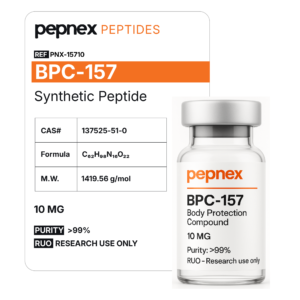
Within repair-oriented peptide research, GHK occupies a complementary position alongside peptides such as BPC-157 and TB-500.
- GHK: matrix signaling and transcriptional regulation
- BPC-157: cytoprotection and vascular signaling
https://pepnex.com/research-bpc-157/ - TB-500: cytoskeletal organization and cellular migration
https://pepnex.com/research-tb-500/
Together, these peptides enable researchers to examine different layers of repair biology, from gene expression to structural reorganization.
Experimental Constraints and Interpretation
As with all peptide-based research, studies involving GHK are subject to limitations:
- Gene expression effects are context-dependent
- ECM models vary significantly by tissue type
- In vitro signaling does not represent full tissue complexity
Accordingly, GHK should be understood strictly as a research tool for studying cellular and matrix signaling, not as a predictor of physiological outcomes.
Research Classification and Context
Within the UK and EU, GHK is classified strictly as a research compound. Its use is limited to:
- In-vitro experimentation
- Laboratory research
- Preclinical investigative models
It is not approved for human or animal use, and all findings remain within a research-only framework.
Conclusion
GHK represents a foundational research peptide used to explore cellular communication and extracellular matrix regulation at a molecular level. Its endogenous origin and minimal structure make it particularly useful for studying peptide-driven signaling without the complexity of growth factors or metal-dependent systems.
By examining GHK independently of copper chelation, researchers gain clearer insight into how short peptides influence tissue organization and repair-related gene regulation in experimental environments.
Research Use Disclaimer
All content provided on this website is for informational and educational purposes only. Compounds discussed are supplied strictly for laboratory and in-vitro research use. They are not medicines, have not been approved by the MHRA, and are not intended for human or animal use. Nothing on this site constitutes medical advice.